How to Clean Vinyl Records the Right Way
Cleaning a vinyl record properly starts with a dry pass from an anti-static carbon-fiber brush before every play, followed by an occasional deeper wash with distilled water and a touch of isopropyl alcohol, or a proper vinyl-specific solution, and then a full dry before the record ever meets a stylus again. Skip anything from a kitchen or bathroom cupboard, since bleach, glass cleaner and similar products leave a residue in the groove rather than lifting one out. If your collection has grown large enough to justify the cost, a dedicated cleaning machine speeds up the whole process, and prices in Europe currently run from around seventy euros for a manual washer kit up to several thousand for a professional ultrasonic unit.
What's the Right Way to Clean a Vinyl Record at Home?
The right way starts before the record ever touches a turntable, with a dry pass from a soft, anti-static carbon-fiber brush that lifts loose dust out of the groove rather than pushing it further in. Hold the brush flat against the surface and follow the direction of the groove in a light circular motion, letting the fibers do the work instead of pressing down. This step takes barely a few seconds and is worth doing before every single play, since most of what damages a stylus over time is simply dust that never got removed in the first place.
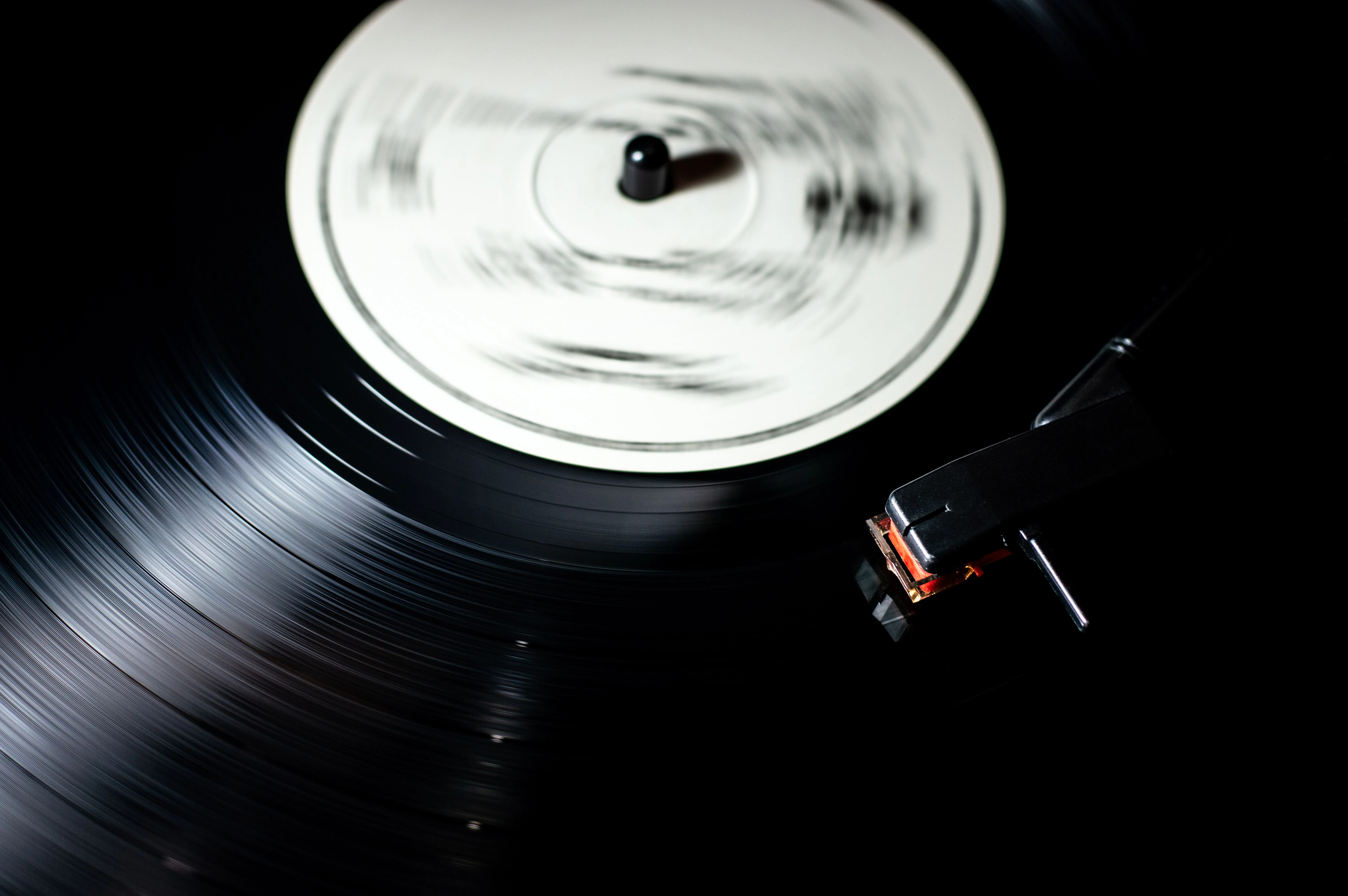
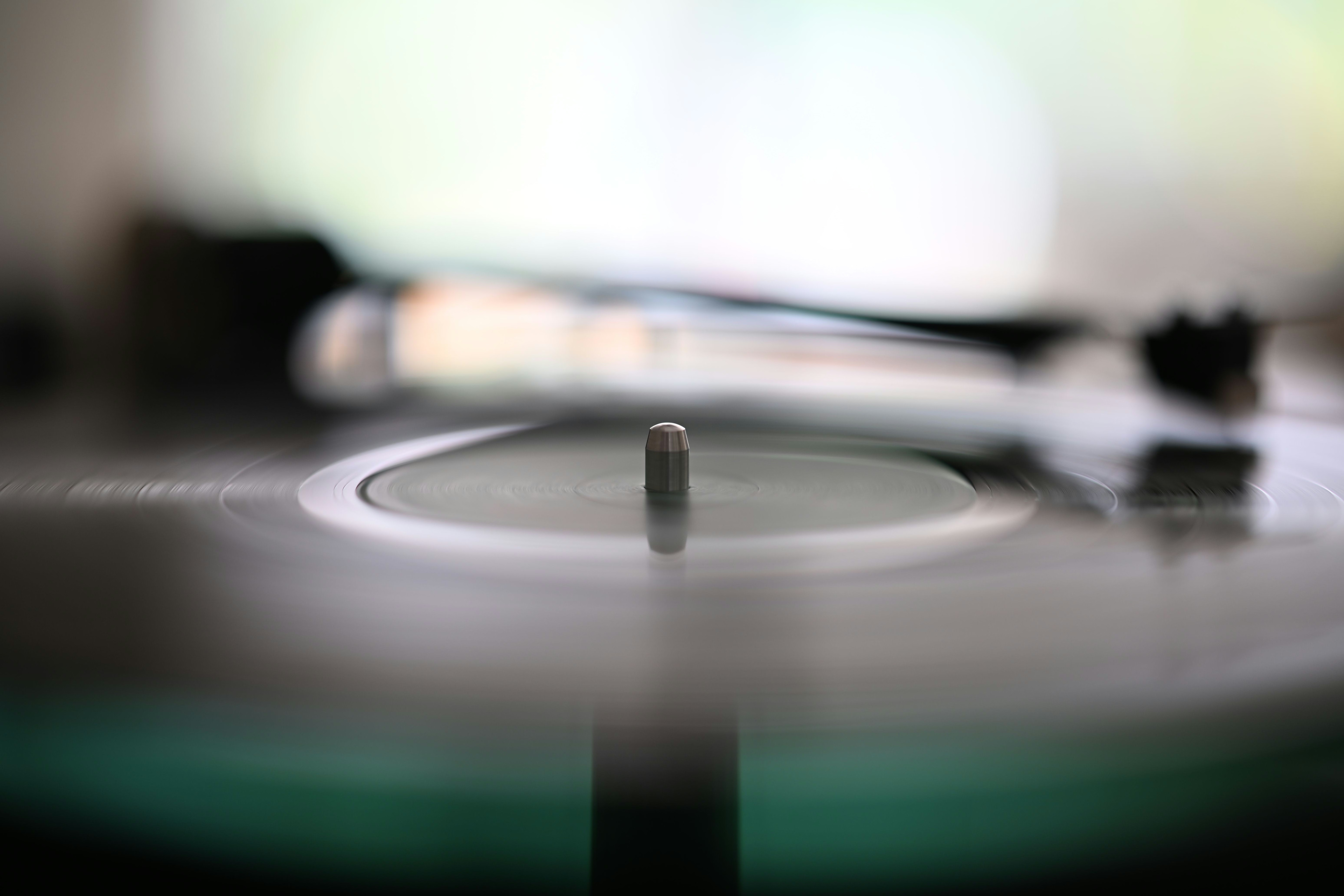
!vinyl record dry brush cleaning technique
Before reaching for anything wet, it helps to actually look at the surface under a lamp or a bright window, tilting the record slightly so the light rakes across the grooves. A light film of dust brushes away in seconds, but embedded grime, a faint haze, or visible fingerprints are a sign the record needs the deeper clean described below rather than another quick dust. Records that get played often need this inspection more frequently simply because they pass through more hands and spend more time exposed to the air in a room, while a record that mostly sits and gets admired rather than played can often go longer between deeper cleans, provided the dry brushing stays consistent.
A deeper wet clean matters far less often, and most collections only need one every ten to twenty plays, or whenever a record starts to look dull under direct light. Distilled water is the base for a reason, since ordinary tap water carries minerals and chlorine that dry into a fresh layer of residue on the very surface you are trying to clean. A small amount of isopropyl alcohol mixed in, generally no more than about ten percent of the total, helps lift oils and older grime without harming the vinyl itself, though plenty of collectors skip mixing their own and buy a ready-made vinyl-specific spray built around the same idea. Apply it lightly, work it in along the groove with a separate cleaning brush or a velvet pad rather than the same brush used for dry dusting, and dry the record fully with a lint-free microfiber cloth before it goes anywhere near a stylus. Playing a record while it is still even slightly damp increases friction against the needle and wears it down far faster than normal use ever would, so patience at this last step matters more than almost anything else in the process.
The label at the center deserves its own attention during a wet clean, since it is made of paper rather than vinyl and soaks up moisture far more readily. Keeping the cleaning solution to the playing surface and away from the label, either by working carefully with a small brush or by using a label protector disc while cleaning, avoids the warping and ink smearing that a soaked label almost always suffers. It is a small detail, but it is the difference between a record that looks cared for after years of cleaning and one whose label slowly turns illegible.
Which Record Cleaning Machine Is Actually Worth Buying?
A cleaning machine earns its price once a collection is large enough, or valuable enough, that hand washing every record starts to feel like a second job rather than a hobby. Three real tiers cover most collectors, and current EUR pricing across them varies enormously depending on how much of the process you want the machine to handle for you.
!vinyl record cleaning machine turntable equipment
A manual washer kit, similar to Knosti's Disco-Antistat, sits at around seventy euros and guides you through spinning, brushing and drying the record by hand rather than doing any of it for you, which makes it a sensible entry point for a growing collection that still gets cleaned by hand. A step up, a vacuum or contact-vacuum machine such as Watsons' VinylCare RCM runs at around five hundred and fifty euros and pulls the cleaning fluid, along with the dirt it loosened, straight off the surface after a spin, cutting the manual effort down considerably. At the top of the range, ultrasonic machines like the Degritter Mark II start at roughly twenty-six hundred euros and use high-frequency sound waves moving through a water bath to shake dirt loose from deep inside the groove without any brush or pad ever touching the surface.
| Tier | Example | Price (EUR) | Best for |
|---|---|---|---|
| Manual washer kit | Knosti Disco-Antistat | around €70 | A growing collection cleaned by hand |
| Vacuum machine | Watsons VinylCare RCM | around €550 | A serious collection cleaned often |
| Ultrasonic machine | Degritter Mark II | from about €2,600 | A large or valuable collection, hands-off cleaning |
Which tier makes sense depends entirely on how many records pass through your hands in a typical month and how much of that time you are willing to spend scrubbing by hand rather than listening.
None of these machines are entirely maintenance-free either, which is worth knowing before buying rather than after. A manual washer kit needs its brushes rinsed and its fluid replaced every so often, a vacuum machine needs its collection tank emptied and its felt strips or vacuum lips wiped down, and an ultrasonic unit needs its tank fluid changed on a schedule and its internal filter checked, since a dirty filter simply redeposits what it already pulled out of the last batch of records. Cleaning time per record also varies enormously between tiers, from a few minutes of hands-on scrubbing with a washer kit down to well under a minute of mostly hands-off cleaning once an ultrasonic machine is running a full batch. For a collection numbering in the hundreds, that difference in time adds up fast enough to justify the higher price on its own.
What Should You Never Use to Clean a Record?
Bleach, glass cleaner, furniture polish and anything else pulled from a kitchen or bathroom cupboard should never touch a record, no matter how tempting a quick fix feels in the moment. These products carry additives, waxes or ammonia that were never designed to sit inside a groove barely a fraction of a millimeter wide, and they tend to leave a film that a stylus later reads as crackle and noise rather than music. Undiluted rubbing alcohol causes similar problems over repeated use, since a concentration much above about ten percent can dry out the vinyl or affect the label if it seeps in at the edges.
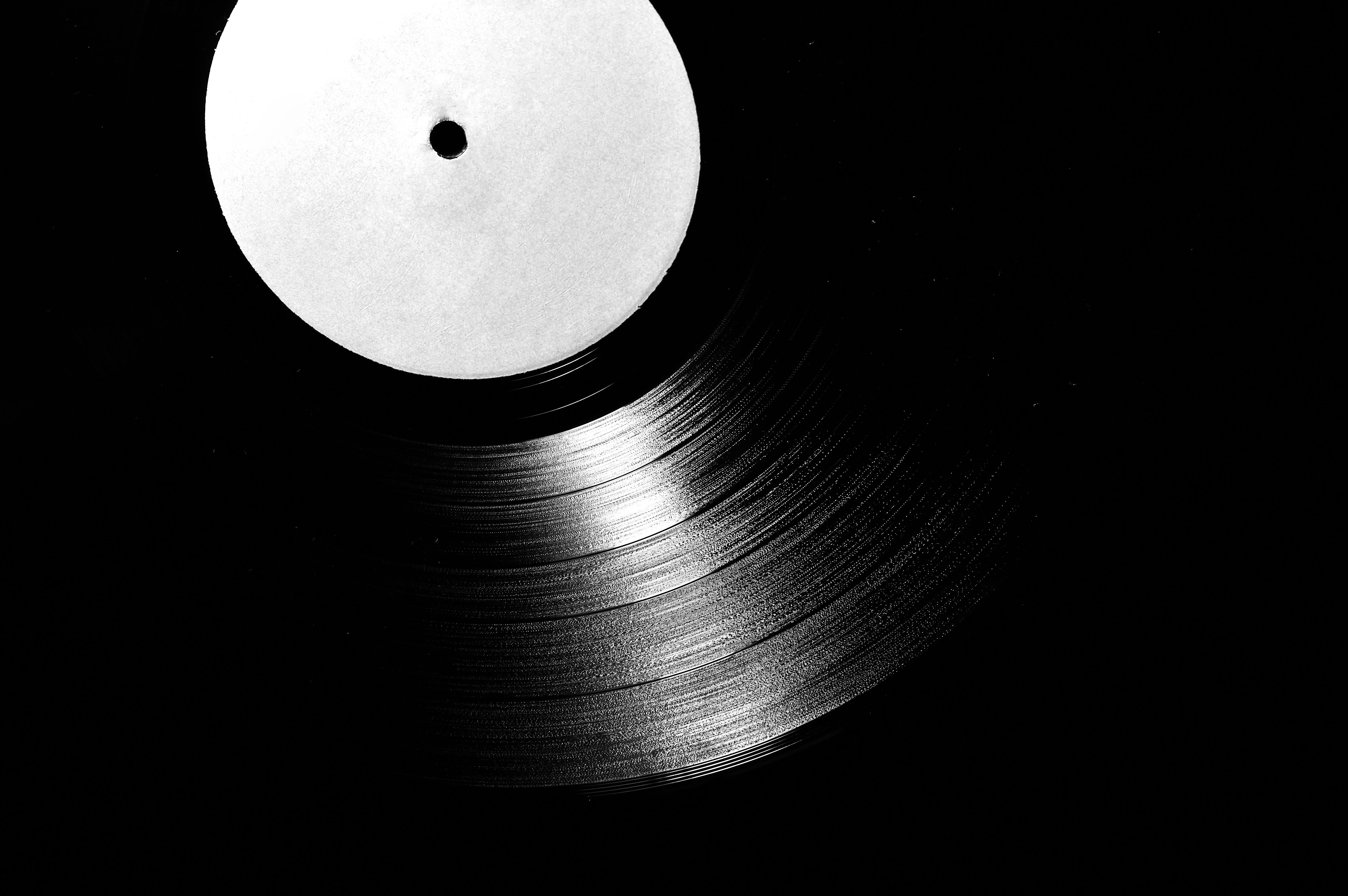
!caution when cleaning vinyl records
Plain tap water deserves the same caution, since the minerals and chlorine it carries dry into a residue of their own, undoing whatever cleaning you just did. Perhaps the simplest rule of all is to never play a record while it is even slightly wet, since the added friction against the stylus wears the needle down far faster than dry playback ever would, and it puts the record's actual sound quality at risk in the process.
Paper towels and ordinary tissues cause a subtler version of the same problem and get overlooked constantly, since they seem harmless compared to a bottle of household cleaner. Both shed tiny fibers of lint that settle straight into the groove, and unlike surface dust, that lint tends to stay put through several plays before finally working its way back out, adding a faint crackle the whole time. A dedicated microfiber cloth or a proper velvet pad costs very little and avoids the problem entirely, which makes it one of the easiest upgrades a collector can make to their routine. None of this is complicated once it becomes habit. It simply means treating a record the way you would treat any other precision surface, and reaching for tools actually made for the job rather than whatever happens to be under the sink.
Does Displaying Your Records Change How You Should Clean and Care for Them?
Yes, and this is the part most cleaning guides skip entirely, since they are written for a collection boxed away in a closet rather than one living out in the open on a shelf or a stand. A record kept upright and visible collects ambient dust continuously, simply from sitting exposed to open room air, rather than only during the brief moment it gets pulled out to play, so a dry brush pass becomes more of a regular habit than an occasional afterthought.
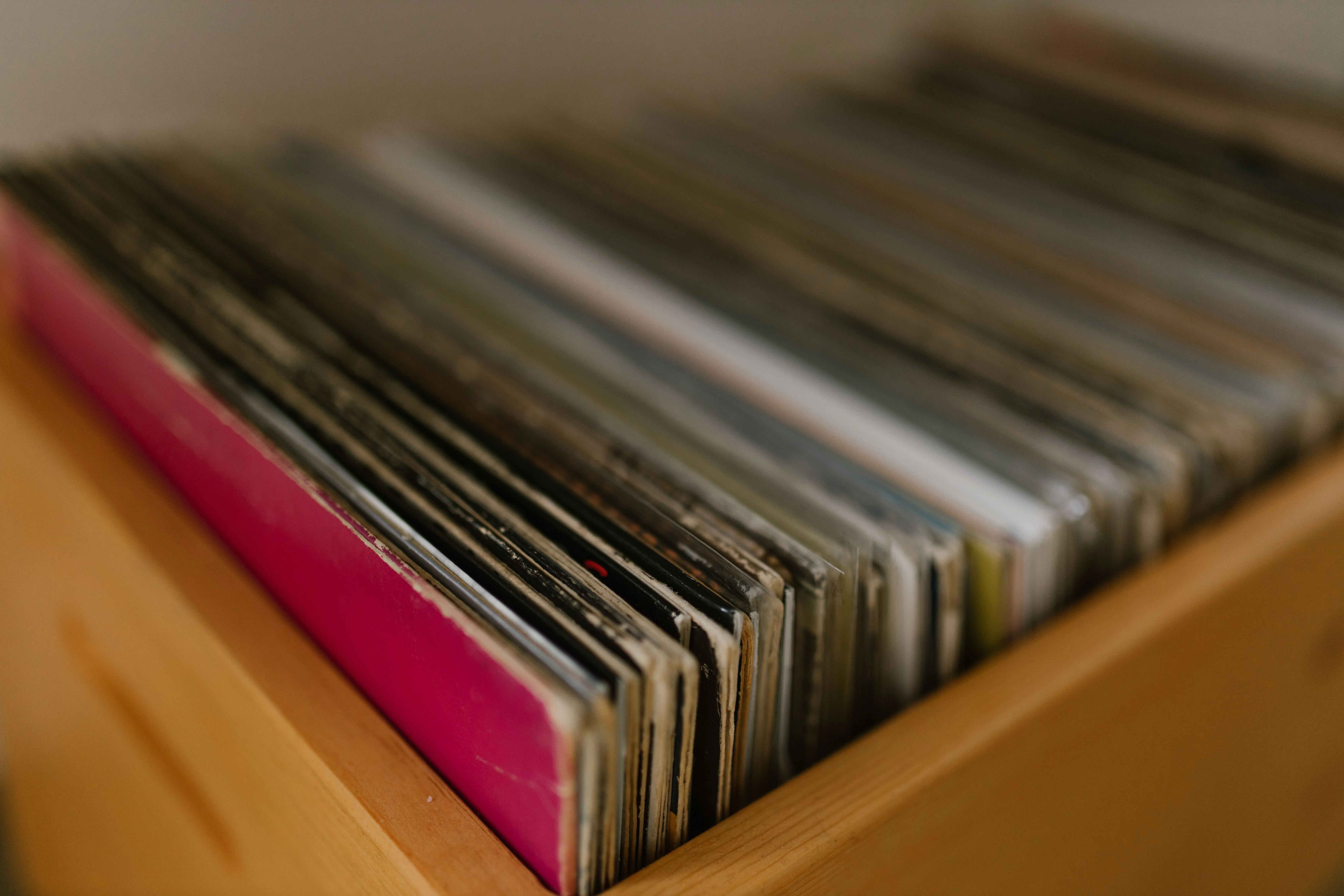
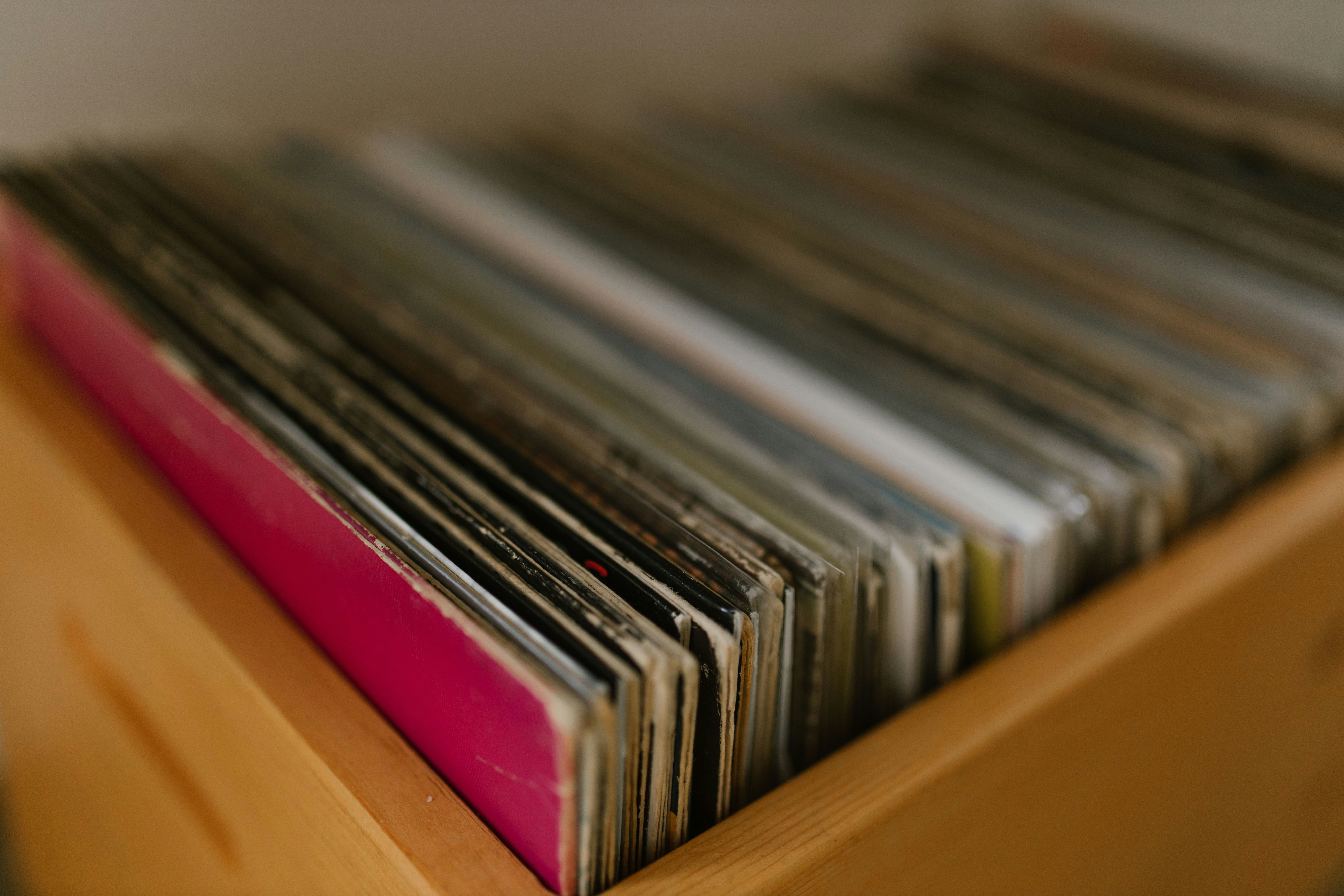
!vinyl records displayed on shelf at home
Direct sunlight matters more here too. A spot near a window can fade cover art within a couple of years and, over a longer stretch, make the vinyl itself more brittle, so positioning a stand or shelf out of direct light does as much for a collection's long-term health as any cleaning routine ever could. Temperature and humidity swings deserve the same attention, and a displayed collection is often more exposed to them than one kept in a closed cabinet, since it usually sits somewhere central to the room rather than tucked away. A shelf near a radiator or a heating vent puts records through repeated warm cycles that can soften the vinyl slightly each time, while a spot near a kitchen or a bathroom introduces humidity swings that encourage the same mold and mildew risk that closed, poorly ventilated boxes are already known for. A stable, moderate room, away from direct heat sources and damp air, suits a displayed collection just as well as it suits one in storage.
A displayed collection also gets handled more often, whether by you or by a curious guest reaching for a favorite cover, which makes the habit of holding a record only by its edge or its label matter more than it would for something that stays hidden away in a crate. This is exactly why a good display stand, like the ones we build at Standivy, keeps each sleeve upright and properly separated rather than leaning under its own weight, since a healthy collection depends on how it is held just as much as how often it gets cleaned.
How Should You Store and Handle Records Between Cleanings, and Can You Fix a Warped One?
Between cleanings, a record should always stand upright, never flat, since even a modest stack puts enough sustained weight on the records underneath to warp them permanently over time. As a rough guide, a shelf or stand section holding more than about thirty to forty records starts to lean and put lateral pressure on the covers at either end, so leaving a little breathing room, or splitting a large collection across more than one section, protects the sleeves as much as the vinyl inside them. Sleeve choice matters more than most collectors realize too, and the two common options each carry their own tradeoff. A plain poly sleeve resists wear better and costs a little more, while a paper sleeve with a poly lining offers a smoother, more rigid feel when sliding a record in and out, at the cost of slightly less long-term protection.
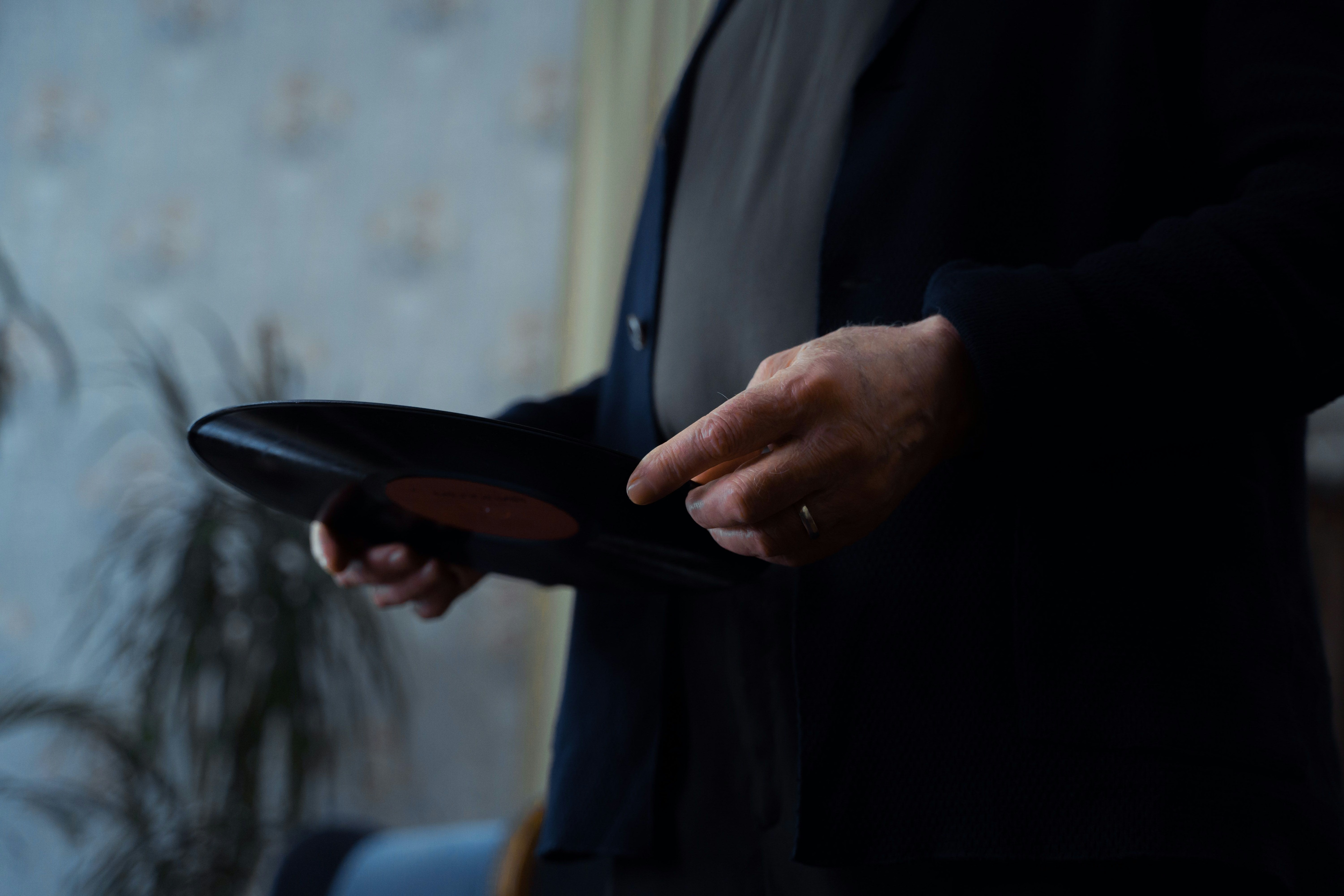
!handling a vinyl record by the edge
Handling habits matter just as much as storage. Touching only the edge or the center label keeps the oils from your skin off the playing surface entirely, and it is worth turning into a reflex rather than something you only remember when a record is especially precious. When damage does happen, the fix depends heavily on what kind it is. A genuinely warped record can often be pressed back into shape using a dedicated record flattener, which works through a slow heat and cool cycle over several hours rather than any kind of quick trick, gently softening the vinyl before pressing it flat between two plates and letting it cool gradually so the shape actually holds. Buying a flattener outright rarely makes sense for an occasional warp, since a handful of specialist restoration services offer the same fix for a single record at a fraction of the equipment cost. A scratch deep enough to cause an audible skip is, honestly, usually permanent, though a lighter surface scratch can sometimes improve noticeably after a proper cleaning machine reaches into the groove more thoroughly than a hand wash ever could.
Make Cleaning Part of the Ritual, Not a Chore
None of this needs to feel like a burden once it becomes part of how you actually listen. A quick brush before the needle drops, an occasional deeper clean when a record starts to look dull, and a bit of care in how you store and handle everything between plays covers nearly every real risk a collection faces. The rest comes down to where and how you keep the records themselves, since a collection that lives out in the open, cared for properly, brings more genuine daily enjoyment than one boxed away and rarely seen.
Most of the collectors who stick with this longest are not the ones with the most expensive machine sitting in a closet somewhere. They are the ones who built a routine simple enough to actually keep up, a quick brush that takes seconds and a deeper clean that happens naturally every few weeks rather than getting put off indefinitely. Start with the basics, a brush and a proper solution, and only reach for a machine once the size of the collection genuinely calls for it. The records themselves will hold up far better for it, and so will the enjoyment of actually playing them.
If you are building out a space for a collection you actually want to look at and reach for often, Standivy's display stands keep every record upright, separated and easy to pull without ever leaning under its own weight. Shop the collection and give your records a home that makes the whole ritual, cleaning included, a little easier to enjoy.
For more on the display side of things, have a look at how storing your records compares with displaying them, or browse minimalist ways to display your vinyl collection and other stylish ideas for displaying vinyl records in your home.
Frequently Asked Questions
Can you clean vinyl records with vinegar?
No, and it is worth avoiding even though the idea comes up often. Vinegar is acidic, and rather than lifting dust out of a groove, it tends to leave its own residue behind as it dries. Distilled water with a small amount of isopropyl alcohol, or a solution actually made for records, cleans vinyl records far more reliably and will not leave anything behind that a stylus later reads as noise.
How often should you clean vinyl records?
A quick pass with a dry, anti-static brush before every play is enough most of the time. A deeper wet clean every ten to twenty plays, or whenever a record starts to look visibly dull under light, keeps most collections in good shape without turning cleaning into a chore.
Can I use rubbing alcohol to clean vinyl records?
Yes, in small amounts. Most cleaning mixes stay at around ten percent isopropyl alcohol to ninety percent distilled water, since a stronger concentration used repeatedly can dry out the vinyl or affect the label over time. A ready-made vinyl-specific solution follows the same principle without any measuring on your part.
Is it safe to clean vinyl records with only water?
Plain distilled water is fine for a light refresh and will not harm the vinyl, but it struggles to cut through the oils that build up from handling or years of dust. For anything beyond a quick touch-up, a small amount of alcohol or a dedicated cleaning solution does the actual work that water alone cannot.
Do record cleaning machines actually make a difference?
Yes, especially the vacuum and ultrasonic tiers. Rather than relying on a cloth or brush to lift dirt back off the surface, these machines physically pull the loosened grime and fluid out of the groove, which is why collectors who switch to one often notice a genuinely quieter surface on records they thought were already clean.
Does cleaning a vinyl record actually improve the sound?
Yes, and often noticeably so. Most of what people describe as vinyl crackle or surface noise is simply dust, oil, or old residue sitting in the groove rather than anything wrong with the pressing itself, so removing it restores sound that was there all along rather than adding anything new.
What is the difference between a cleaning machine and just using a brush?
A brush only ever works on the surface it can physically reach, which handles loose dust well but leaves anything embedded deeper in the groove untouched. A cleaning machine, whether a manual washer, a vacuum model, or an ultrasonic unit, uses fluid to loosen grime the brush cannot reach and then physically removes it, which is why a machine clean often reveals a level of quiet that brushing alone never quite gets to.