How to Store Vinyl Records So They Actually Last
Vinyl records store best standing upright on their edge, never flat, in a room that stays close to normal living temperature and out of direct sunlight, with a plastic inner sleeve protecting the playing surface and a sturdy outer sleeve protecting the jacket. Get those four things right and a record can genuinely last a hundred years or more, since vinyl is a stable material that mostly gets damaged by pressure, heat, and light rather than simple age. The part most storage guides skip is what happens once a growing collection outgrows the shelf it started on, and that question matters just as much as the basics, since the way you plan for growth now decides how much reorganising you'll be doing a year from now.
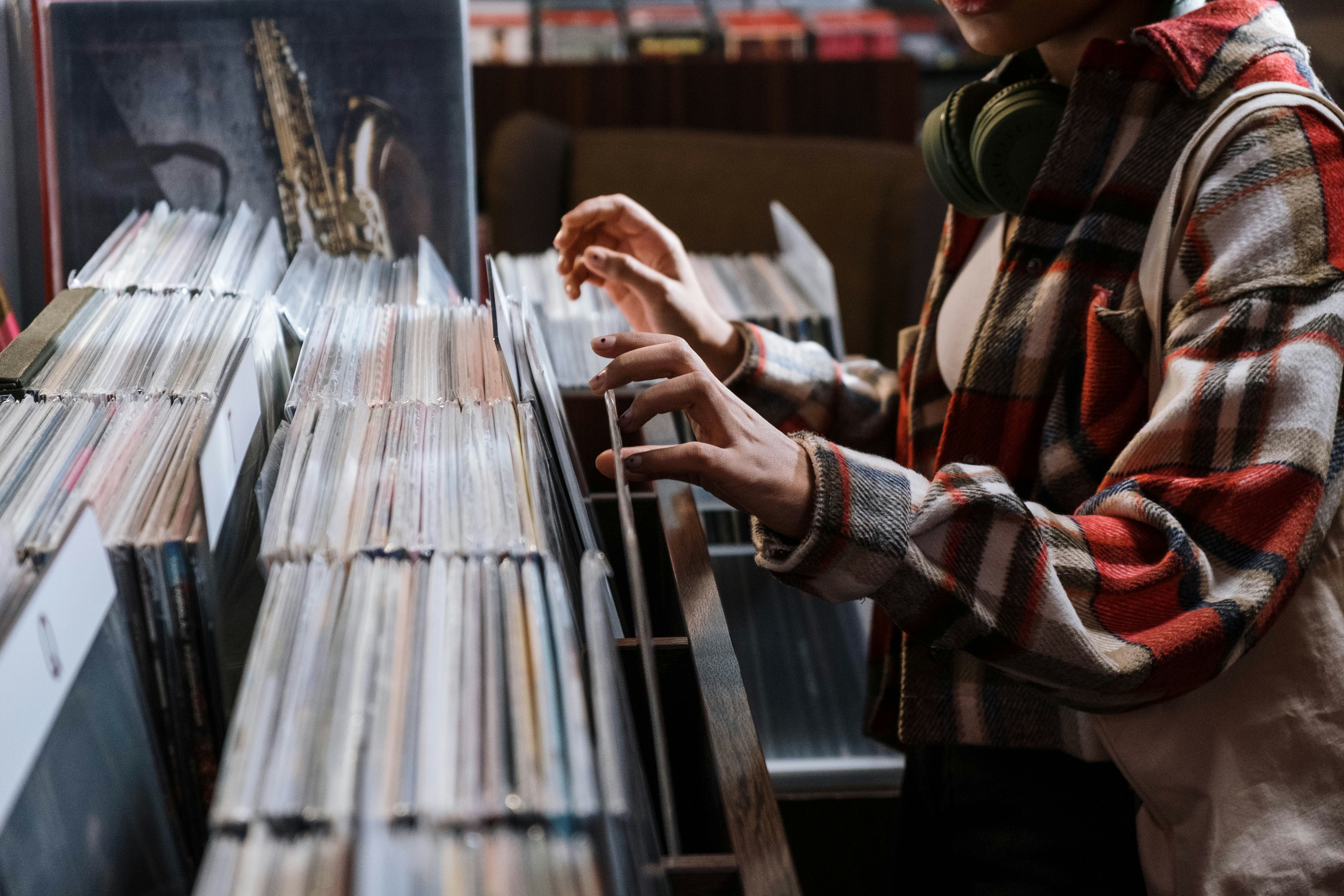
Photo by RDNE Stock project on Pexels
What's the Right Way to Store Vinyl Records?
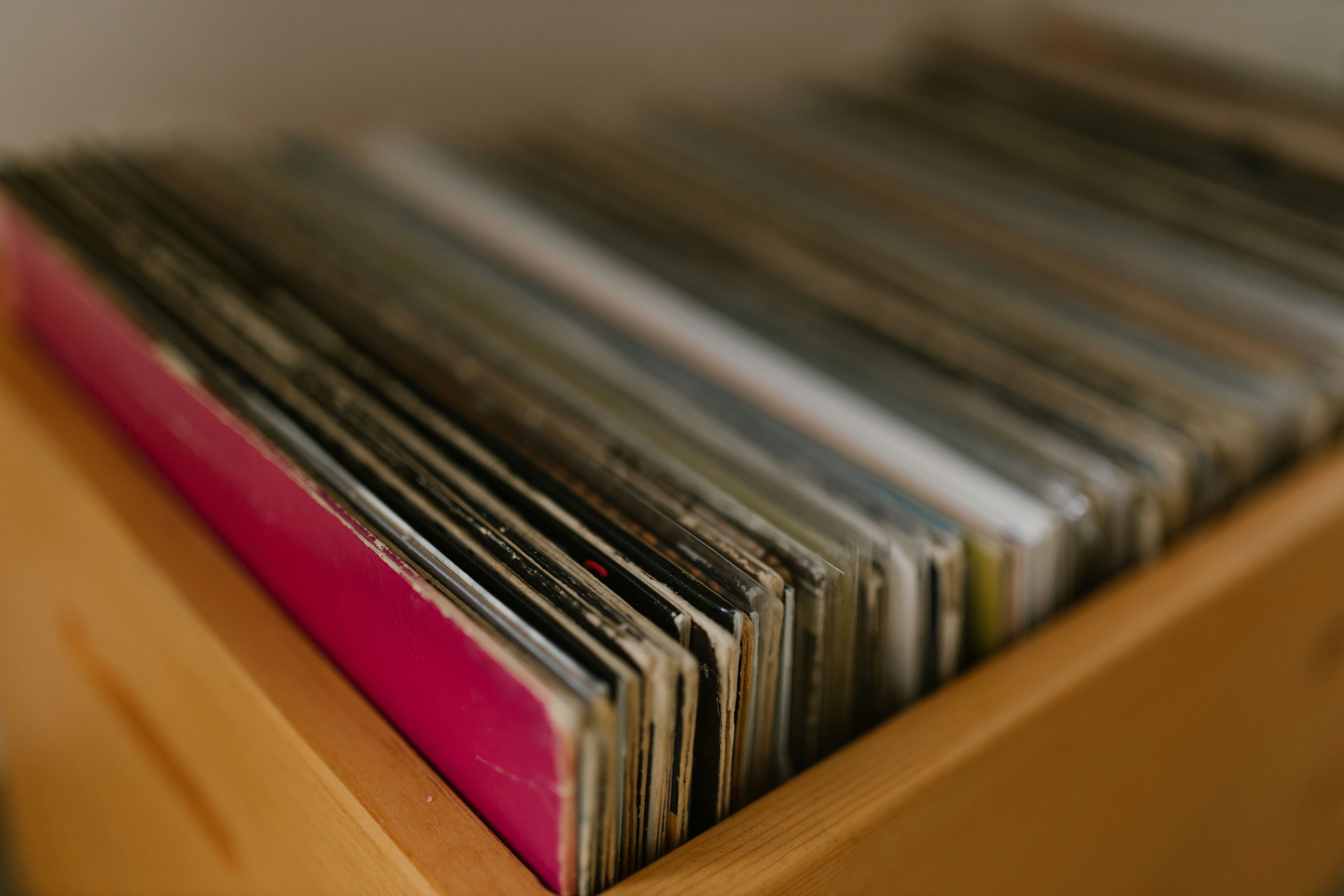
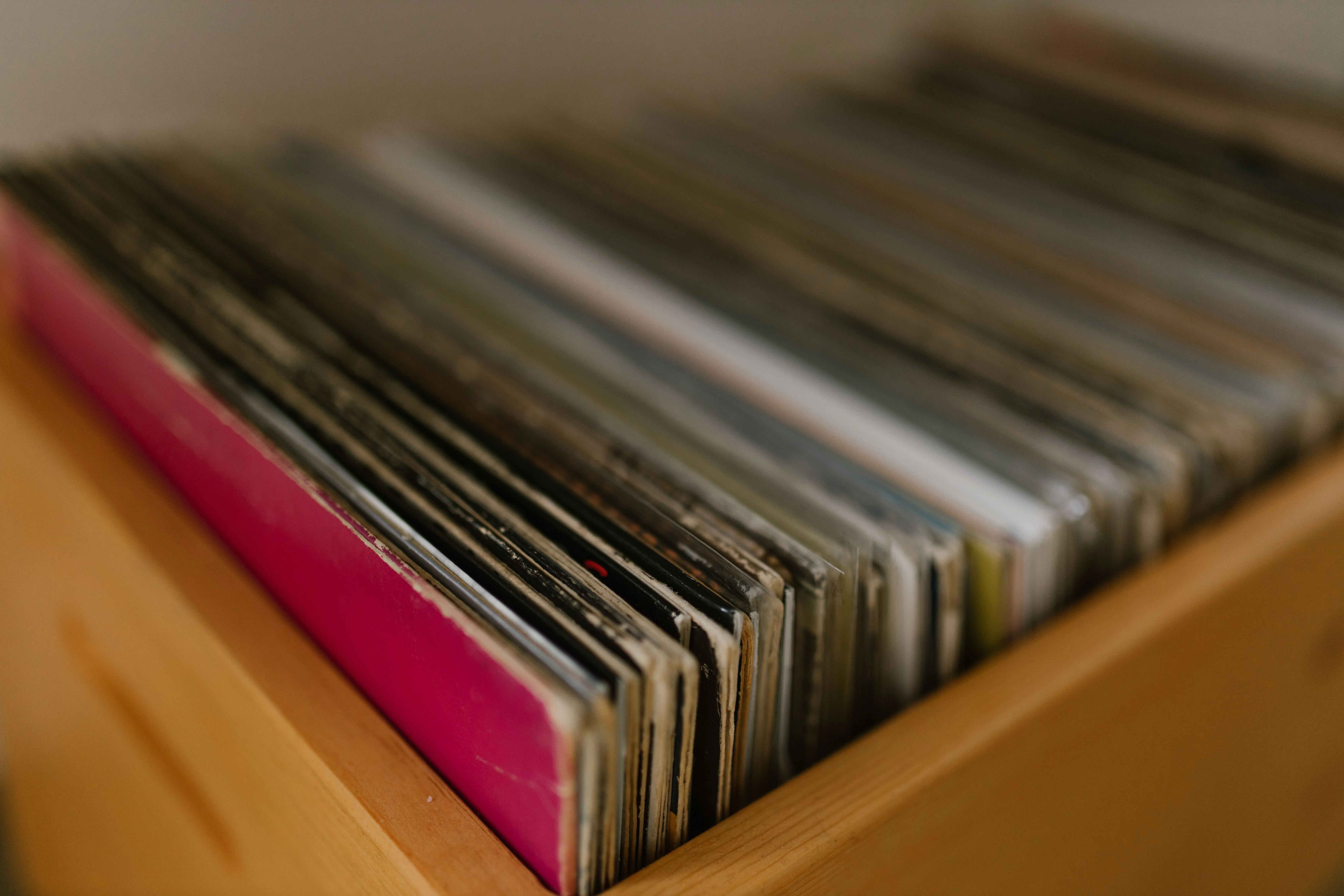
The right way starts with orientation: records belong on their edge, standing vertically, the same way books stand on a shelf rather than piled in a stack. Vinyl is soft enough that even a modest stack left flat puts a slow, constant weight on every record beneath it, and that pressure is exactly what turns a flat record into a warped one over months rather than days. Standing records upright removes that weight entirely, since each sleeve only carries its own thin slice of pressure rather than the sleeves stacked on top of it.
!vinyl records stored upright on edge in a crate
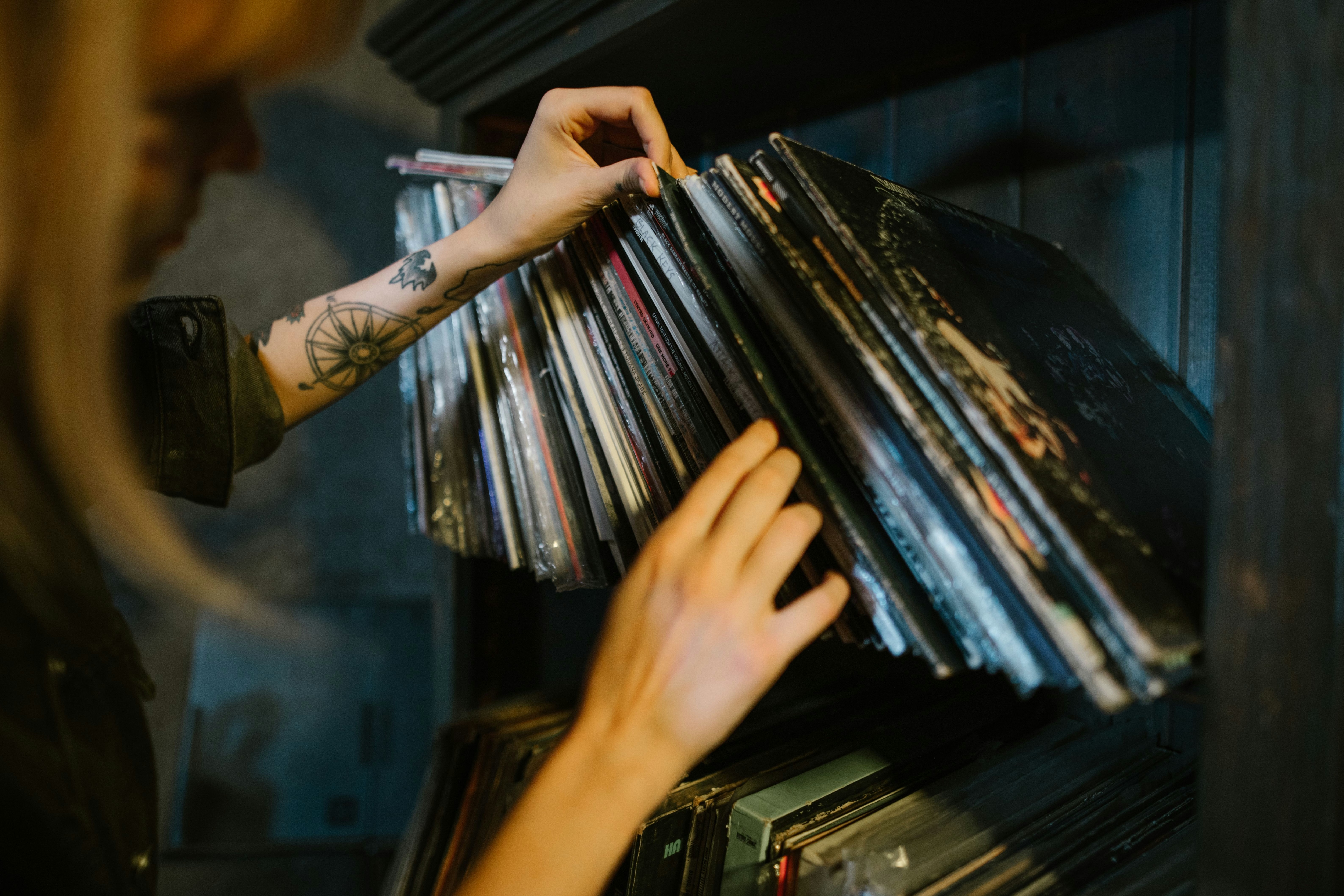
Photo by Tima Miroshnichenko on Pexels
A shelf, a crate with dividers, or a dedicated storage cabinet all work, provided the records inside have enough support to stay upright without leaning hard to one side. A row packed too loosely lets the end records lean and slowly bow, while a row packed too tightly makes every record hard to pull without scraping its neighbours, so the goal is snug but not crammed, with enough give to slide a single sleeve out cleanly. Dividers, whether built into a crate or added separately, help more than most people expect, since they break a long row into shorter sections that hold their shape instead of one continuous wall of weight leaning against whatever sits at the end.
The material a shelf or crate is built from matters more than it first seems, too. A rigid wooden crate or a properly braced shelving unit holds its shape under the weight of dozens of records, while a flimsy wire rack or a thin plastic bin can bow slightly under that same load, which quietly reintroduces the leaning problem you were trying to avoid in the first place. Leaning a small stack of records against a bookend or a wall without any real support underneath is another version of the same mistake, since the records at the bottom of that lean still carry uneven pressure even though technically nothing is lying flat.
Where Should You Keep Your Records?
Room temperature or slightly below is the safe range, and the practical version of that rule is simple: keep records out of anywhere that gets noticeably hotter or colder than the rest of your home. Attics bake in summer, garages swing between extremes across the seasons, and a shelf pushed right up against a radiator or heating vent puts records through repeated warm cycles that soften the vinyl slightly each time, even if no single cycle causes visible damage on its own.
!vinyl record shelf placed away from a sunlit window
Direct sunlight deserves its own mention, since it does two kinds of damage at once. It fades cover art within a couple of years on a shelf that sits right in a sun patch, and over a longer stretch it can make the vinyl itself more brittle through the same heat that warms the room around it. Humidity matters too, though less as a specific number to hit and more as a question of stability: a cheap hygrometer left on the shelf for a week or two shows whether a room swings between damp and dry, and a steady, moderate reading is worth far more than chasing an exact percentage. A basement or garage that stays genuinely dry year round can work fine, but most don't, which is why a living space almost always beats a utility room for anything you actually want to keep.
Seasonal changes catch a lot of collectors out, since a spot that feels perfectly fine in spring can turn into a problem once summer sun tracks higher through the window or winter heating runs for months at a time. It's worth walking past your shelf at different times of day across a few seasons and simply noticing whether direct light ever reaches it, rather than assuming a room is safe because it looked fine the day the shelf went in. A sealed cupboard or closed cabinet with no airflow at all can cause its own quiet problem too, since trapped moisture has nowhere to go and slowly encourages the same damp conditions you were trying to avoid by moving records indoors in the first place. A little airflow around a storage space, even just a door left slightly open rather than sealed shut, goes a long way toward keeping the air inside it as stable as the room around it.
Which Sleeves and Covers Actually Protect a Record?
A plastic inner sleeve does more for a record's long-term condition than almost anything else in this whole guide, since it's the layer that actually touches the playing surface every time a record goes back in its jacket. Paper sleeves, especially older ones without a plastic lining, shed fine fibres directly onto the grooves and can scuff the surface slightly with every insertion, which adds up to real wear over years of handling even if no single instance feels like damage.
!vinyl record inner sleeve protecting the record surface
Photo by RDNE Stock project on Pexels
An outer poly sleeve over the cardboard jacket earns its keep too, protecting the artwork from shelf wear, dust, and the slow scuffing that happens every time a record gets pulled out and slid back in next to its neighbours. It's a small cost against the alternative, since a jacket with a torn spine or a scuffed corner is much harder to fix after the fact than to prevent in the first place. Between the two, the inner sleeve matters more for the record's actual sound and the outer sleeve matters more for how the collection looks and holds up cosmetically, so a tight budget is better spent on inner sleeves first if you have to choose.
Some inner sleeves also carry an anti-static lining, which helps in a genuinely practical way rather than as a marketing detail, since static is exactly what attracts loose dust to a record sitting on a shelf between plays. It's a small upgrade over a plain poly sleeve and worth it for records that get handled often. Sleeves do wear out eventually too, and it's worth actually checking them every so often rather than assuming they last forever: a sleeve that has gone visibly cloudy, developed a tear along the seam, or feels rough rather than smooth against the vinyl has stopped doing its job properly and is worth replacing before it starts adding the wear it was meant to prevent.
How Much Shelf Space Does a Growing Collection Actually Need?
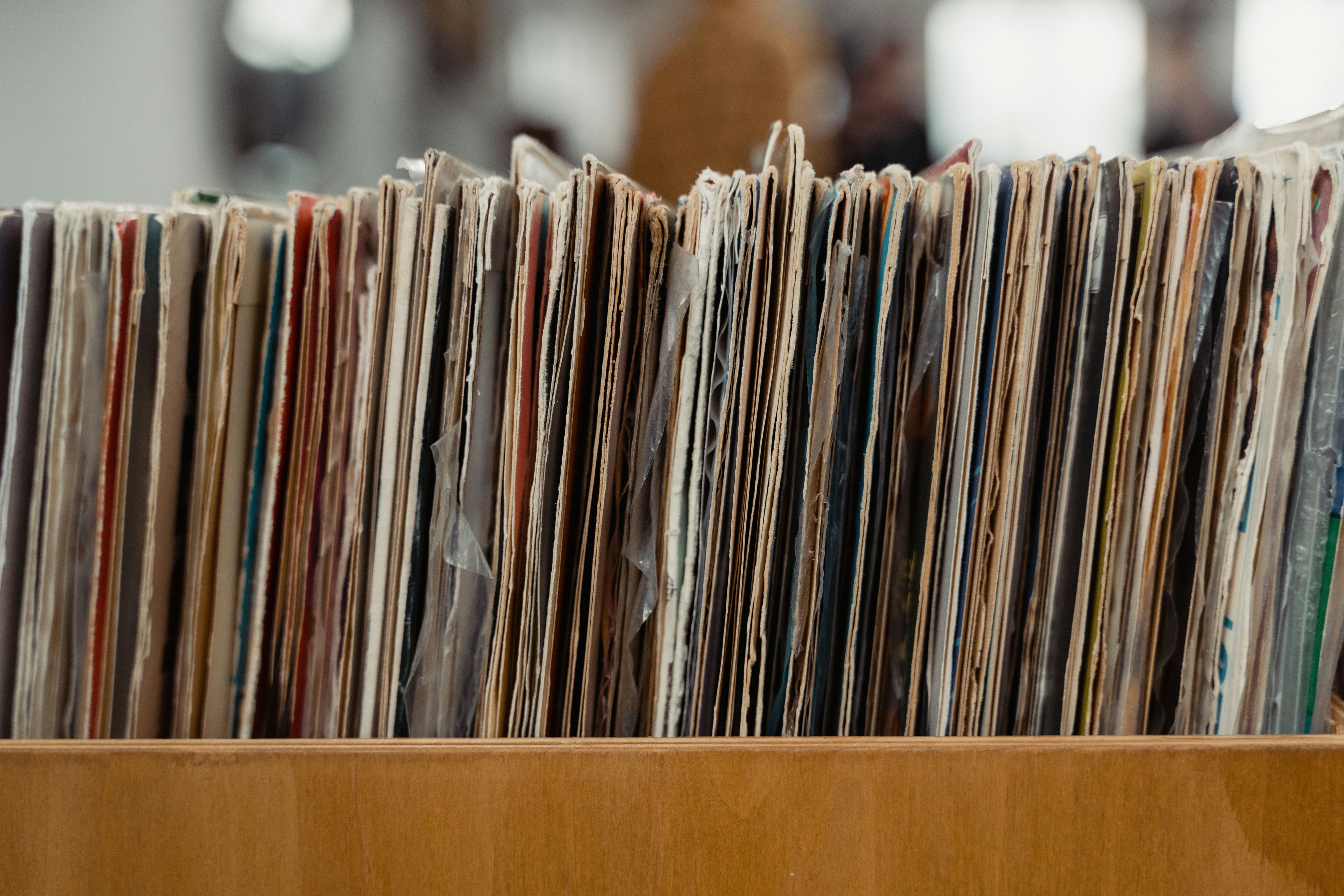
The honest answer is more than most people plan for, since a collection that starts at fifty records and grows steadily tends to outgrow its first shelf faster than expected. Rather than guessing at a single number, it helps to think in sections: a shelf that holds one long, unbroken row eventually strains at the ends as it fills, while the same shelf split into a few shorter sections stays supported and easy to browse the whole way through.
!shelving unit filled with a large vinyl record collection
Photo by cottonbro studio on Pexels
This is also where planning for growth pays off, rather than buying storage sized exactly to today's collection. A rack built to hold a fixed number of records, like Standivy's Onyx Comb Rack, which holds up to eleven LPs side by side for around nine euros, works well for a rotating set of favourites kept close at hand, while the bulk of a larger collection still needs proper shelving or crates behind it. Thinking about storage in tiers like this, a small rotating section for what you're actively playing and a larger archive for everything else, solves the space problem more cleanly than trying to fit an entire growing collection onto one shelf built for a smaller one.
There are a few honest signs a shelf has stopped being enough. Records at either end of a row start leaning noticeably rather than standing straight, new arrivals get stacked flat on top "temporarily" because there's nowhere upright left to put them, or you find yourself squeezing one more sleeve into a row that was already snug. Any of those is worth treating as a signal to add a section rather than a habit to push through, since a shelf under real strain is exactly the situation that leads back to the two biggest mistakes further down this guide, leaning and flat stacking. Going taller with a second shelf, or splitting a collection across a couple of separate units rather than one continuous run, both solve the problem without needing to rethink the whole setup from scratch.
Does Storage Have to Mean Hiding Your Collection Away?
Not at all, and treating storage and display as opposites is where a lot of collectors box themselves into an either-or choice they don't actually need to make. A record kept upright, separated, and out of direct light is properly stored whether it sits in a closed crate or stands on an open shelf where you can see it, since the same three conditions protect it either way. The only real difference is that a displayed record needs slightly more attention to dust, simply because it sits exposed to open room air rather than inside a closed box.
!vinyl records displayed upright on a stand at home
Photo by RDNE Stock project on Pexels
We've written more about this trade-off in our piece on storage versus display, and the short version is that most collectors do best with both: a small display for the records you reach for constantly, and real storage behind it for everything else. A well-built stand holds a record just as securely as a crate does, with the added benefit that a favourite album becomes part of the room rather than something you have to go looking for. If you want ideas for how that can actually look in a home, our guide to displaying vinyl records well covers the aesthetic side in more depth.
The dust habit is worth being specific about, since it's the one genuine trade-off of keeping records out in the open. A record tucked inside a closed crate mostly collects dust only when it's pulled out to play, while a displayed record sits exposed to whatever is circulating in the room the whole time. A quick dry brush before playing, the same habit any well-kept collection should already have, covers this easily, and it's a small enough addition to a routine that it rarely changes anyone's mind about keeping favourites on show. For collections tight on room, our guide to small-space display ideas shows how to fit a display into even a modest apartment without giving up proper storage behind it.
What Common Storage Mistakes Actually Damage Records?
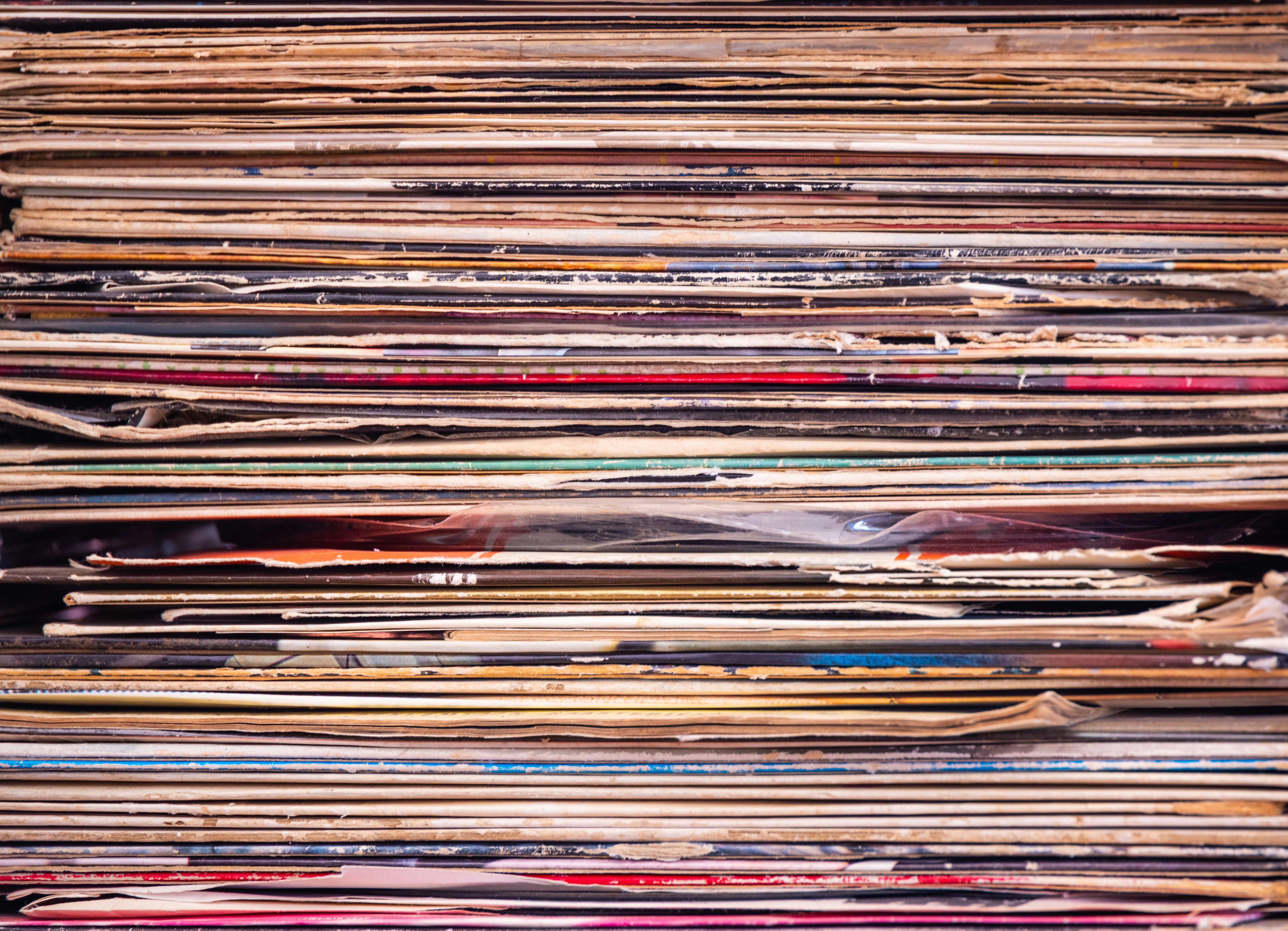
The single most common mistake is stacking records flat, usually temporarily "just for now" while unpacking or reorganising, and then never getting around to standing them back up. Even a short stack left flat for a few weeks puts enough sustained weight on the records underneath to warp them, and a warp caused this way is often permanent once it sets in.
!warped vinyl record from improper flat storage
Photo by Magda Ehlers on Pexels
Damp storage is the second big one, since a basement or closet that holds onto moisture encourages mold and mildew on paper sleeves and cardboard jackets long before it does any visible harm to the vinyl itself, by which point the damage to the packaging is often already done. Reusing old paper sleeves without a plastic lining is a smaller mistake that adds up slowly rather than all at once, scuffing the surface a little more with each play until a record that started out clean sounds noticeably worse years later. A less obvious one is leaving records in a car boot or trunk after a record fair or a shop visit, since a closed car in the sun can get far hotter than any room in a home within an hour, hot enough to soften vinyl in a way no shelf ever would. None of these ruin a record overnight. They wear a collection down quietly over months and years, so the fix is simply building better habits early rather than repairing the damage after the fact.
Give Every Record a Home That Actually Protects It
Storing vinyl properly comes down to a handful of habits that take barely any extra time once they become routine: records stand upright, sleeves do the protecting, the room stays out of direct sun and away from extreme heat, and a growing collection gets more shelf space before it starts leaning on itself. None of it requires expensive equipment or a dedicated room, just a bit of intention about where and how the records actually sit day to day.
The collectors with the healthiest collections years down the line usually aren't the ones with the most elaborate setup. They're the ones who solved storage early, before a pile of "I'll deal with it later" records turned into warped covers and scuffed jackets. Whether that means a proper shelf, a set of crates, or a mix of storage and display for the records you love enough to actually look at, Standivy's display stands keep your favourites upright and protected while the rest of the collection stays properly stored behind them. Shop the collection and give every record, played often or not, a home that actually looks after it.
For more on keeping a collection in good shape, see our guide to cleaning vinyl records the right way, or browse minimalist ways to display your vinyl collection if you're weighing how much of it belongs on a shelf where you can actually see it.
Frequently Asked Questions
What is the best way to store vinyl records long term?
Records last longest stored upright on their edge, in a room that stays close to normal living temperature, out of direct sunlight, with a plastic inner sleeve doing the actual work of protecting the surface. Done consistently, a record can stay playable for a hundred years or more, since the vinyl itself is a remarkably stable material as long as it is never left to lean, bake, or sit in damp air.
Should vinyl records be stored flat or upright?
Always upright, never flat. A single record can survive lying flat for a short stretch, but any stack left flat for weeks or months puts a slow, constant weight on every record underneath it, and vinyl is soft enough that this pressure eventually shows up as a permanent warp.
Can you store vinyl records in a basement or garage?
Only if the space stays genuinely dry and doesn't swing wildly in temperature through the seasons, which rules out most unfinished basements and garages. Damp air encourages mold on the sleeves and jackets, while a garage that gets hot in summer and cold in winter puts records through exactly the kind of temperature swings that living spaces are built to avoid.
What humidity level is safe for storing vinyl records?
There's no single magic number, but the goal is stability rather than a specific reading: a basic hygrometer left on the shelf for a couple of weeks will show whether the room swings between damp and dry, and a steady, moderate level matters more than hitting an exact percentage.
How many vinyl records fit on a standard shelf?
It depends entirely on the shelf, but it's worth thinking in sections rather than one long row. Splitting a large collection across several smaller sections, rather than a single shelf packed edge to edge, keeps records from leaning under their own weight as the row fills up.
Does displaying vinyl records instead of boxing them away damage them?
Not if the display holds each record upright and separated the same way proper storage does. The real risk with display is direct sunlight and heat near a window or radiator, not the fact that the records are visible, so a stand placed thoughtfully protects a collection just as well as a closed box.